

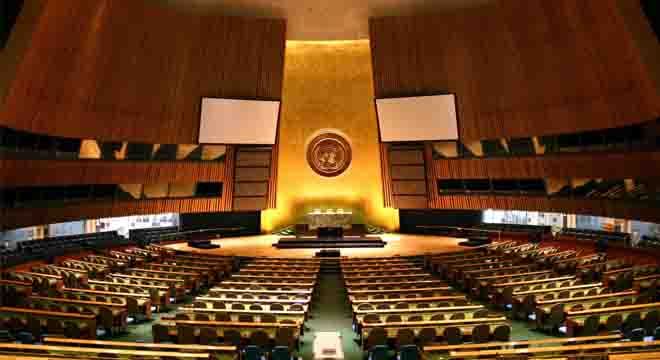
UNITED NATIONS, May 21 (APP): Amid a growing wave of Islamophobia across the world, the United Nations General Assembly on Wednesday unanimously adopted a resolution, jointly sponsored by Pakistan and the Philippines, emphasizing the importance of interreligious and intercultural dialogue in promoting peace, tolerance and non-violence globally. The resolution, co-sponsored by dozens of countries, called on member states to promote inclusion and unity in order to combat racism, xenophobia, hate speech, violence and discrimination. It also reaffirmed the commitment of all states to uphold universal human rights and fundamental freedoms in accordance with the UN Charter and the Universal Declaration of Human Rights.
Presenting the biennial resolution, Pakistan’s Permanent Representative to the UN, Asim Iftikhar Ahmad, speaking on behalf of the Philippines and all co-sponsors, stressed the importance of promoting a culture of peace that embraces diversity, inclusivity and equality while rejecting stereotypes and divisions among societies and nations. He noted that despite progress made over the years, much more remains to be done to fully achieve these ideals. Recalling UNESCO’s famous principle, he said peace must be built “in the minds of men,” as wars also begin there.
The Pakistani envoy explained that the “technical rollover” retained the key principles reaffirmed through the consensus adoption of the resolution during the General Assembly’s seventy-eighth session. The resolution stressed that while freedom of expression is a fundamental right, it also carries special duties and responsibilities and may therefore be subject to legitimate restrictions. It also recognized the importance of respecting religious symbols and reaffirmed that violence can never be justified as a response to acts of intolerance, nor should such violence be associated with any religion, nationality, civilization or ethnic group.
Although the resolution was adopted unanimously, some delegations, particularly India, expressed reservations over certain sections. Rejecting what he termed “unwarranted and baseless” remarks by India, Pakistani delegate Zulfiqar Ali said it was unfortunate that India had attempted to undermine the significance of the united message delivered by the international community through the consensus adoption of the resolution.
Referring to the Kartarpur Corridor, Zulfiqar Ali said it had facilitated the pilgrimage of Sikh devotees to Gurdwara Darbar Sahib Kartarpur, where thousands of pilgrims from around the world, especially from India, visit in complete safety and dignity. He added that Pakistan’s decision to renew the Kartarpur Agreement with India in 2024 for another five years reflected Islamabad’s commitment to safeguarding the rights of religious minorities. The move, he said, had earned appreciation from the Sikh community worldwide and from the international community, including UN Secretary-General Antonio Guterres, who described the initiative as a “Corridor of Hope.”
Criticizing India’s human rights record, the Pakistani delegate said Muslims, as the largest minority group in India, continue to face hate crimes, discrimination, cow vigilantism, desecration of places of worship and ghettoization. He urged the Indian government to end what he described as the patronage of persecution against minorities and to ensure accountability for those involved in such acts.