
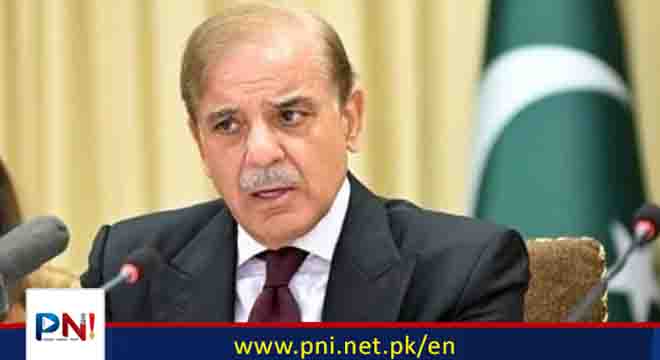
Prime Minister Muhammad Shehbaz Sharif directed the relevant authorities to review the matter of extending the exemption from super tax for exporters and called for immediate measures to resolve issues faced by the business community.
The prime minister issued the directives during a meeting with a delegation of prominent industrialists and business leaders at the Prime Minister’s House to discuss measures for promoting export-led economic growth.
He said the purpose of the meeting was to consult the business community on promoting export-oriented economic growth. He thanked the business leaders for their valuable proposals during the budget-making process, saying several of their suggestions had been incorporated into the federal budget.
He said the government was taking effective measures to promote business activity and improve the ease of doing business, while reducing energy costs remained among its key priorities.
The prime minister expressed his resolve to make the recently established Trade Facilitation Board an effective institution for promoting trade and welcomed proposals from the business community to further improve its performance and scope.
He said the Special Investment Facilitation Council (SIFC) had provided investors and the business community with a convenient platform where facilities were being provided under a one-window operation.
PM Shehbaz Sharif said work was also underway on a regulatory guillotine to reduce the unnecessary regulatory burden on businesses, simplify rules and regulations, lower compliance costs and facilitate business activities.
He said significant progress had been made in the digitization of the Federal Board of Revenue (FBR), adding that the FBR had collected Rs800 billion through enforcement during the last financial year.
The prime minister said the country’s macroeconomic conditions had improved considerably due to the efforts of the economic team, but further work was required at the microeconomic level to ensure that the benefits of economic improvement reached the people.
He said the government was focusing on training manpower according to the requirements of industry to equip young people with skills aligned with market needs.
During the meeting, the delegation was briefed on government measures for improving the economy and promoting business, trade and industry.
The meeting was informed that port charges had been reduced and the operational capacity of the country’s ports had improved. Work was underway on the upgradation of Motorway M-10 and the Pipri Freight Corridor to improve inland connectivity from Karachi’s ports.
The participants were informed that construction of Motorway M-13 (Kharian-Rawalpindi) would reduce the distance between Lahore and Islamabad, while upgradation of Pakistan Railways would improve infrastructure and facilitate faster transportation of commercial goods.
The delegation was also informed that government measures had resulted in a record increase in the country’s IT exports. The government was providing training to one million people in information technology and artificial intelligence.
The meeting was further informed that measures were being taken to promote small and medium enterprises (SMEs), increase their participation in the export sector and facilitate financing for such businesses.
The business leaders appreciated the country’s macroeconomic stability and expressed confidence in the government’s economic reforms and policy measures.
They particularly appreciated initiatives relating to the Export Development Fund (EDF), timely payment of tax refunds and FBR digitization.
The business community also welcomed Pakistan’s successful issuance of a $3 billion bond, saying it reflected improved macroeconomic stability and growing business confidence in the country.
The business leaders expressed their commitment to continuing cooperation with the government to promote export-led economic growth and appreciated its privatization and deregulation policies.
Members of the delegation also highlighted issues relating to their respective businesses and industrial sectors and put forward proposals for their resolution.
The meeting was attended by Deputy Prime Minister and Foreign Minister Muhammad Ishaq Dar, Federal Ministers Ahsan Iqbal, Rana Tanveer Hussain, Ahad Khan Cheema, Azam Nazeer Tarar, Musadik Malik, Attaullah Tarar, Shaza Fatima, Sardar Awais Ahmad Khan Leghari and Ali Pervaiz Malik, Advisers Muhammad Ali and Haroon Akhtar, Minister of State Bilal Azhar Kayani and senior government officials.
The delegation included Mian Muhammad Mansha, Arif Habib, Saqib Shirazi, Atif Bajwa, Muhammad Ali Tabba, Musaddiq Zulqarnain, Umar Saeed, Samad Dawood, Ashraf Mookaty, Shahid Soorti, Shehzad Asghar, Ziad Bashir, Shehzad Saleem, Asif Peer, Aamir Ibrahim, Javed Bilwani, Siddiq Bhatti, Fawad Anwar, Khurram Mukhtar and Yousaf Hussain.