The stranger on my doorstep knew about the yellow nursery.
That was what frightened me most.
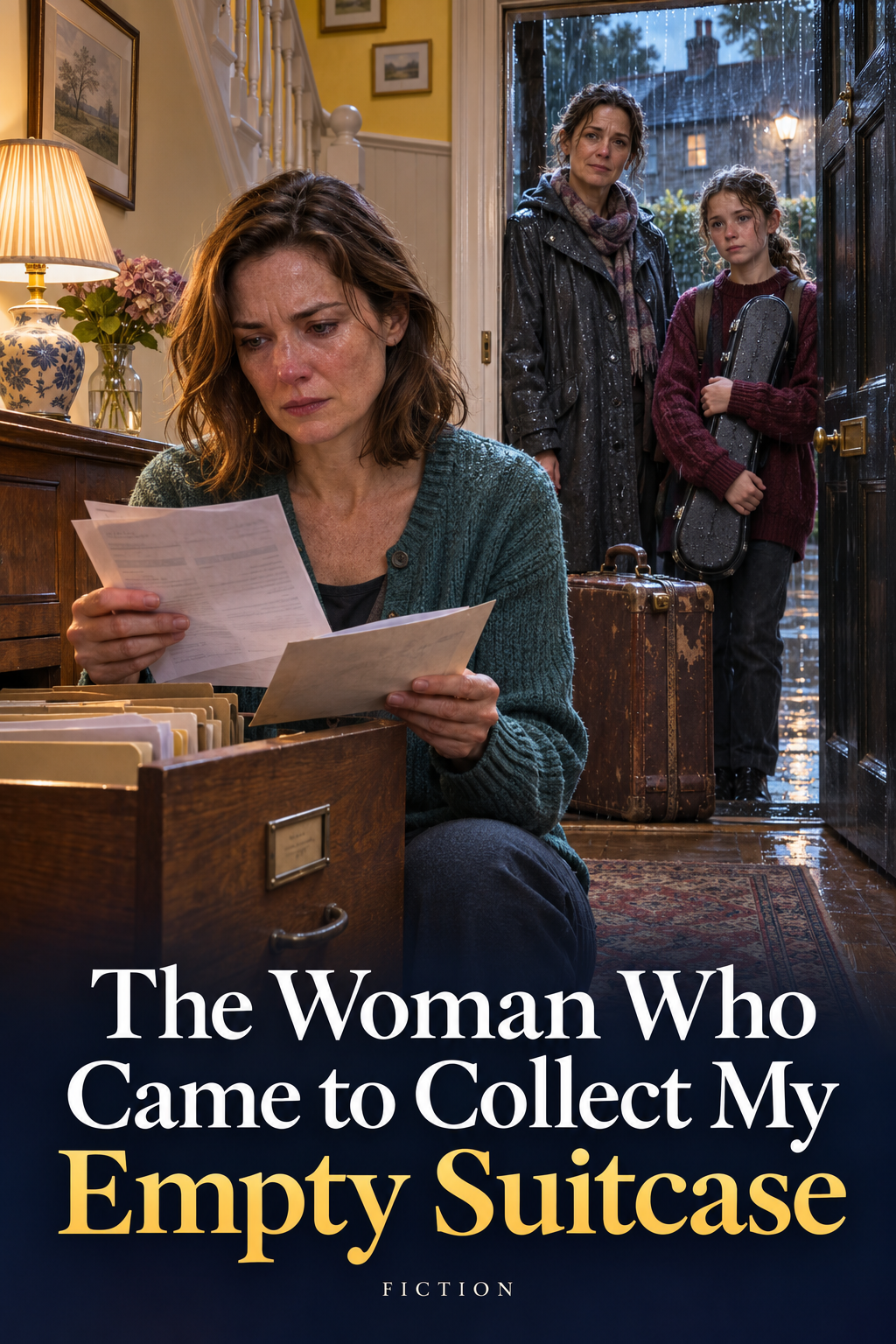
Not her rain-soaked coat or the suitcase beside her. It was the way she glanced toward our upstairs window and said, “Graham told me you’d kept the room ready.”
Behind her stood a girl of about twelve, gripping a violin case with both hands.
“I’m sorry,” I said. “Ready for whom?”
The woman’s expression changed.
“My daughter. For the audition.”
My husband had told me he was spending the weekend helping his elderly brother move. Now someone I had never met was showing me messages promising her a room in our house.
The woman introduced herself as Sylvie. Her daughter, Ada, had won an audition at the city conservatory. Graham had offered accommodation through a charity supporting young musicians.
There was just one problem.
I ran that charity.
And we had never offered accommodation.
I invited them inside because Ada was shivering. While she drank hot chocolate, Sylvie showed me a receipt.
Eight hundred pounds.
A “refundable placement deposit,” paid into an account bearing my charity’s name.
For three years, Graham had handled our finances while I organized concerts and visited schools. Whenever I asked about the shrinking balance, he blamed rising costs.
Recently, he had suggested closing the charity.
“You’re exhausting yourself, Beth,” he’d said. “Perhaps it’s time to accept that some things don’t work out.”
He had used the same gentle voice when discussing the adoption we had abandoned eighteen months earlier.
I had believed him when he said our application had been rejected.
That evening, after finding Sylvie and Ada a room with a trusted volunteer, I opened the filing cabinet Graham kept locked.
The spare key was exactly where he always accused me of leaving things: in the kitchen junk drawer.
There were eleven accommodation deposits.
Withdrawals marked as instrument repairs.
And, beneath the bank statements, a letter from our adoption agency requesting a response to a proposed assessment date.
Attached was an email Graham had sent from our shared account.
We have decided not to proceed.
I sat on the floor until my legs went numb.
When he returned Sunday, I placed the documents between us.
He barely glanced at the money.
“I was going to replace it.”
“And the adoption?”
His silence lasted longer.
Finally, he said, “I didn’t want a child. You wouldn’t have stayed if I’d told you.”
I had rehearsed shouting. Instead, I heard myself ask, “So you let me grieve a decision you made.”
He reached across the table.
I moved my hand.
The following months were neither swift nor graceful. I reported the missing funds, stepped aside while the trustees commissioned an audit, and sold the car I owned outright to begin reimbursing families. The charity recovered more through the legal process, but rebuilding trust took longer than recovering money.
Sylvie refused my first repayment cheque.
“You didn’t take it,” she said.
“No,” I replied. “But you trusted something with my name on it.”
She accepted it then.
Ada passed her audition. At her first student concert, Sylvie saved me a seat.
A year later, the upstairs room was still yellow.
It held donated instruments now: scuffed cellos, small violins, a trumpet with a stubborn valve. Once a month, Sylvie helped me match them with children who needed them.
I had also restarted the adoption process, this time on my own. There were forms, interviews, and no promises.
But every letter came to me.
And every answer was mine.