The first thing I heard my birth mother say was, “Could you ask her before you give me her number?”
I was standing in a parking lot with a bag of melting groceries when my phone played the message. A caseworker had forwarded it with my permission. I’d turned twenty-five the week before, and six months earlier I’d put my name on a reunion registry and spent the rest of the afternoon pretending I didn’t care what happened.
The woman on the recording took an audible breath.
“Tell her my name is Lenora. She can call me that.”
I played that part three times. Then I drove straight to my mother’s house and let the ice cream melt on her kitchen counter.
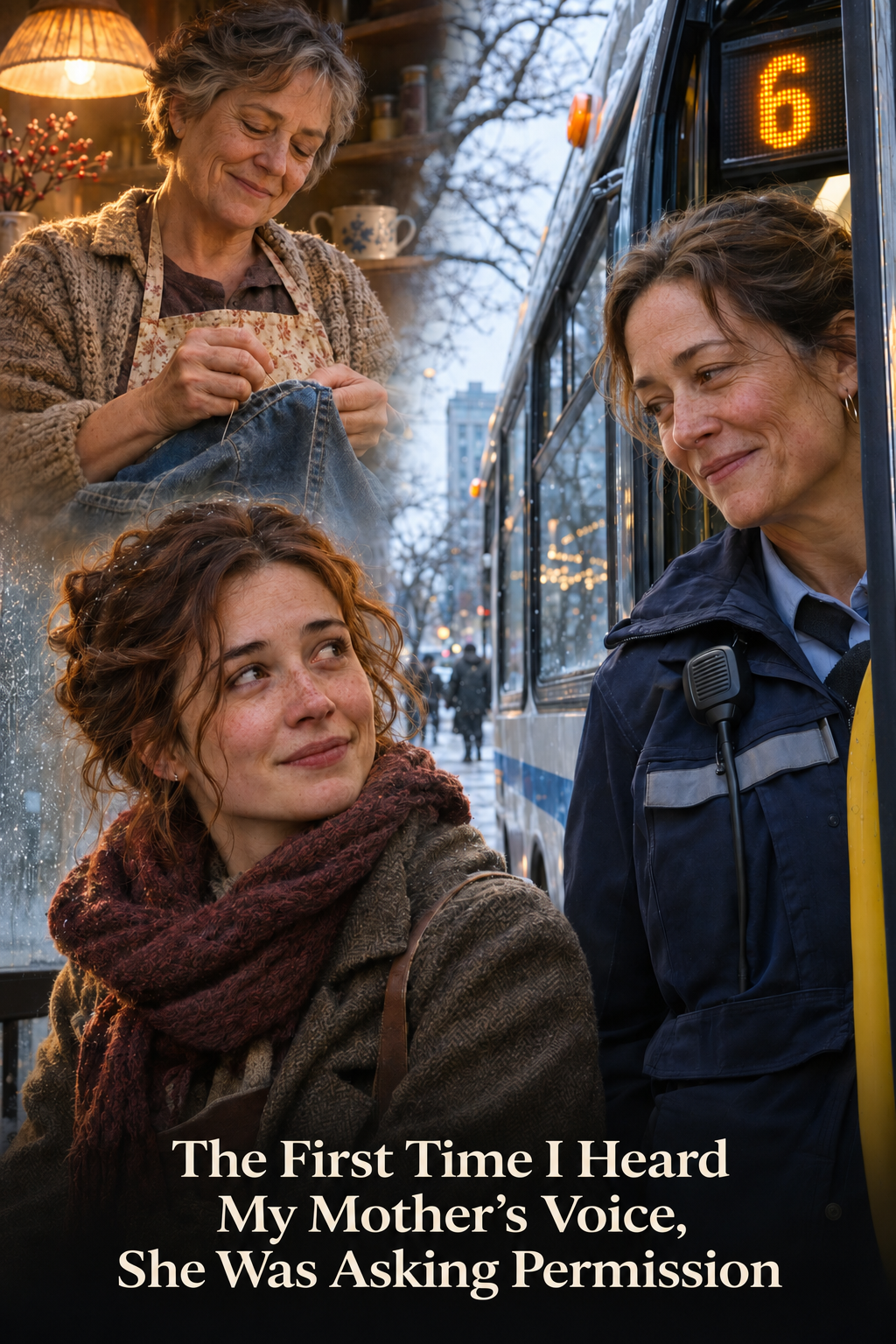
My mother, Ruth, was hemming a pair of work pants under the light above the stove. She’d raised me from the age of four months and adopted me before I turned two. She packed a sewing kit on vacation and routinely forgot her toothbrush.
“Lenora found me,” I said.
Ruth stopped with the needle halfway through the denim.
“I wondered if she might, once you signed up.”
I sat down. “You knew her name?”
“Yes.”
“You always said she couldn’t take care of me. What does that mean?”
Ruth pulled the thread through slowly. “It means I got used to giving you the answer I gave you when you were six.”
I sent Lenora a message that night. I proposed the public library on Saturday, where I worked repairing damaged books. I chose the hour before closing. If things went badly, somebody would come around and tell us to leave.
Lenora arrived carrying a paper cup and wearing a city bus driver’s uniform. She was forty-three. I knew because I’d done the arithmetic so often that I sometimes thought of her age before I thought of my own.
“Willa,” she said, trying out my name.
“You can sit.”
She put the cup down. Her fingers stayed around it until the cardboard buckled.
“Did you come back for me?” I asked.
“At first, every week.”
I’d spent years preparing for an answer. Somehow I’d skipped that one.
Lenora told me she’d been eighteen when she signed the papers for temporary foster care. She’d lost her room in a boardinghouse that prohibited children and was sleeping on a coworker’s sofa. On her first supervised visit, I cried so hard that she walked me up and down a hallway until the caseworker had to remind her she could sit down.
“By the fourth visit, you knew my voice,” she said. “Or you knew I was the person who kept singing the same verse because I couldn’t remember the rest.”
“Why did you stop coming?”
“I didn’t stop then. I signed the adoption papers when you were seventeen months old.”
A librarian wheeled a cart past us. One of its wheels squeaked every time it turned. I listened until it went quiet.
“You came back every week,” I said. “Then you signed me away?”
“Yes.” She looked down at the cup. “By then I had a room and a job. I also knew that when you fell, you looked for Ruth. I could have asked for more time. I was scared of what another year of waiting might do to you, and I was scared I’d get you back and lose the room or the job again. Some days I think I gave up too soon.”
I asked her why she remembered how old I’d been down to the month.
“Because I bought a birthday card for when you turned two,” she said. “And by the time I could have sent it, I’d agreed to let Ruth decide when you were ready to hear from me.”
“Did she ever decide?”
Lenora looked at me for a long second. “I mailed her my address when you turned eighteen. She said you’d asked her to leave it alone.”
At eighteen, I’d asked Ruth to stop telling relatives the story of my adoption over birthday cake. I remembered putting the plates in the sink while I said it. I remembered she’d followed me in and said, “Of course, honey.”
I drove to her house again. This time I turned off the engine and sat until she came to the porch.
“You told Lenora I didn’t want to hear from her.”
Ruth gripped the railing. “I did.”
“Did you think that’s what I meant?”
“For a while I let myself think so.” She sat on the top step. “Then you were going away to college. You were excited enough to buy your own frying pan. I thought you’d meet her and take her side, and every time you came home you’d be looking at me differently.”
“I am looking at you differently.”
“I know,” she said. She moved her feet so I could sit. I stayed where I was.
For three weeks I spoke to neither of them. Lenora sent one message saying she drove the number six route on Thursdays if I ever wanted to ride. Ruth left a container of soup on my porch. The next morning I sent her a text asking her to call before she came over. The following Sunday, she did.
In December, I boarded the number six at the far end of town. Lenora glanced at me in the mirror and opened her mouth, but a passenger behind me wanted to know if the bus stopped at the hospital. I paid my fare and sat down.
At the end of the route, she had eleven minutes before she had to turn around. She asked if I wanted to spend them with her. We stood outside by the bus shelter while she ate an egg sandwich wrapped in wax paper.
“Do you remember that song yet?” I asked.
“Still just the one verse.”
I asked her to sing it anyway. She got through about four words before a truck passed and drowned her out. This time, when she started over, I could hear her laughing. I’d heard the song before. Ruth used to sing it while she checked the bathwater with her wrist.
“Ruth knows that song,” I said.
“She ought to. She gave me the second verse.”
Lenora folded up the wax paper. Across the street, the traffic light changed twice before either of us spoke again.
“I can come next Thursday,” I said. “If you’re driving.”
“I am. Eleven minutes again.”
“That worked pretty well today.”
She waited until I’d crossed at the light before pulling away. By the time I reached my car, I’d remembered the second verse. I called Ruth to make sure I had the words right.