

Islamabad, March 08
Ambassador Masood Khan, former President of Azad Jammu and Kashmir and former Pakistan Ambassador to the United States, China, and the United Nations, has warned that the ongoing conflict in the Middle East has already evolved into a large-scale regional confrontation with far-reaching geopolitical and economic consequences.
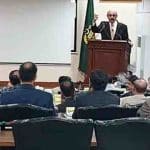
In a televised interview analyzing the evolving security environment in the Middle East, Ambassador Masood Khan observed that the conflict has expanded far beyond a limited military engagement. He noted that nearly fourteen countries are currently under direct attack or involved in hostilities, while the broader strategic environment suggests that approximately twenty-one to twenty-two countries are directly or indirectly affected by the war. According to him, the repercussions are being felt across North America, Europe, and the Asia-Pacific region.
Ambassador Khan remarked that this conflict represents one of the largest military confrontations since the end of the Second World War. Unlike earlier wars in Iraq or Afghanistan, which were limited in scope and conducted by coalition forces against individual states, the present conflict has expanded across a wider theatre, involving multiple state and non-state actors and affecting global markets and strategic routes.
He pointed out that the war has already disrupted economic stability, particularly through rising oil and gas prices and volatility in international financial markets. Major economies in East Asia—including China, Japan, and South Korea—are facing significant pressure due to energy supply vulnerabilities. He cautioned that if disruptions continue, particularly in critical maritime routes such as the Strait of Hormuz, the world could face a broader energy and economic crisis.
Discussing the implications for Pakistan, Ambassador Khan emphasized that instability in Iran could create serious security challenges along Pakistan’s western border. He warned that any prolonged internal instability in Iran, including the possibility of civil conflict in its border regions, could exacerbate security vulnerabilities in Balochistan and increase the risk of cross-border militant activity.
From a diplomatic perspective, Ambassador Khan stated that Pakistan has maintained a constructive and balanced approach. Prior to the outbreak of the conflict, Pakistan had strengthened its relations with the United States, expanded strategic cooperation with Gulf countries, and signed a Strategic Mutual Defence Agreement with Saudi Arabia. These steps, he said, were aimed at enhancing Pakistan’s security and economic resilience.
He further noted that Pakistan continues to advocate for de-escalation and dialogue, maintaining contacts with Gulf states, Iran, and other regional actors in an effort to prevent further escalation. However, he acknowledged that the ultimate decisions shaping the trajectory of the conflict are being taken in Washington and Tel Aviv
Ambassador Khan also highlighted the broader geopolitical implications of the conflict. He observed that while Russia and China have criticized the escalation and expressed diplomatic support for Iran, neither power appears willing to engage directly in the conflict due to the risk of triggering a wider global war
“The continuation of this conflict carries grave risks not only for the Middle East but for the entire international system,” Ambassador Masood Khan concluded. “What the world needs urgently is restraint, diplomacy, and a collective effort to prevent the conflict from spiraling into a wider and more destructive confrontation.”
Follow the PNI Facebook page for the latest news and updates.