

Islamabad, March 18
Ambassador Masood Khan, former President of Azad Jammu and Kashmir and former Ambassador of Pakistan to the United States and Permanent Representative to the United Nations, has stated that the ongoing conflict involving Iran has revealed deep fissures in the global order, highlighting strategic miscalculations, humanitarian consequences, and the growing isolation of the United States on the international stage.
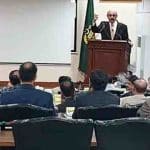
In a televised analysis of the evolving situation, Ambassador Masood Khan observed that recent military actions have inflicted significant damage across Iran, with widespread targeting of military personnel, strategic installations, and civilian infrastructure. He noted that the scale and intensity of attacks have resulted in a serious humanitarian crisis, with large numbers of civilian casualties, including women and children.
He emphasized that the conflict reflects the nature of an asymmetric war, where conventional military superiority is being challenged through the use of ballistic missiles, drones, and other strategic capabilities. Despite the disparity in strength, Iran has demonstrated resilience and the capacity to sustain its defensive posture under severe pressure.
Analyzing the political dimensions of the conflict, Ambassador Masood Khan stated that decision-making within the United States appears to be heavily influenced by external strategic alignments, particularly with Israel. He noted that recent actions were undertaken without broad-based international support or consensus, raising questions about legitimacy and long-term consequences.
He recalled that a diplomatic pathway had previously been established through the 2015 nuclear agreement, which involved major global powers and provided a framework to regulate Iran’s nuclear program. The subsequent withdrawal from this agreement, he noted, undermined diplomatic progress and contributed to the current escalation, even as negotiations were reportedly underway to revive dialogue.
Ambassador Khan further observed that the conflict has diverted global attention from other pressing issues, including the humanitarian crisis in Gaza and developments in the Occupied Palestinian Territories, where violence and illegal settlements continue unabated. He stressed that selective application of international law continues to erode global trust and credibility.
Highlighting the broader geopolitical implications, he noted that traditional alliances are under strain, with key European countries showing reluctance to fully support recent military actions. He pointed out that several allies have distanced themselves, reflecting a lack of political and moral consensus. This, he said, has reinforced the perception of the United States acting in isolation despite its global power status.
Ambassador Masood Khan also underscored the emerging economic dimensions of the conflict, including disruptions in global energy markets and the growing discourse around alternative financial systems that could challenge the dominance of the US dollar. He warned that prolonged instability could have far-reaching consequences for global trade and economic stability.
He concluded that the situation underscores the urgent need for renewed diplomacy, adherence to international law, and a balanced approach to conflict resolution. “Sustainable peace cannot be achieved through force alone,” he stated. “It requires dialogue, restraint, and a commitment to justice and multilateralism.”
Follow the PNI Facebook page for the latest news and updates.