Some kindnesses are loud. The grand gestures, the GoFundMes, the viral videos. But most of the kindness that actually changes lives is the kind nobody films. A look. A small thing handed across a counter. A stranger who stays five seconds longer than they had to. A person who notices what everyone else misses. These fourteen stories are about exactly that—moments so small they could have disappeared without a trace, yet powerful enough to change the course of someone’s life forever.
1.
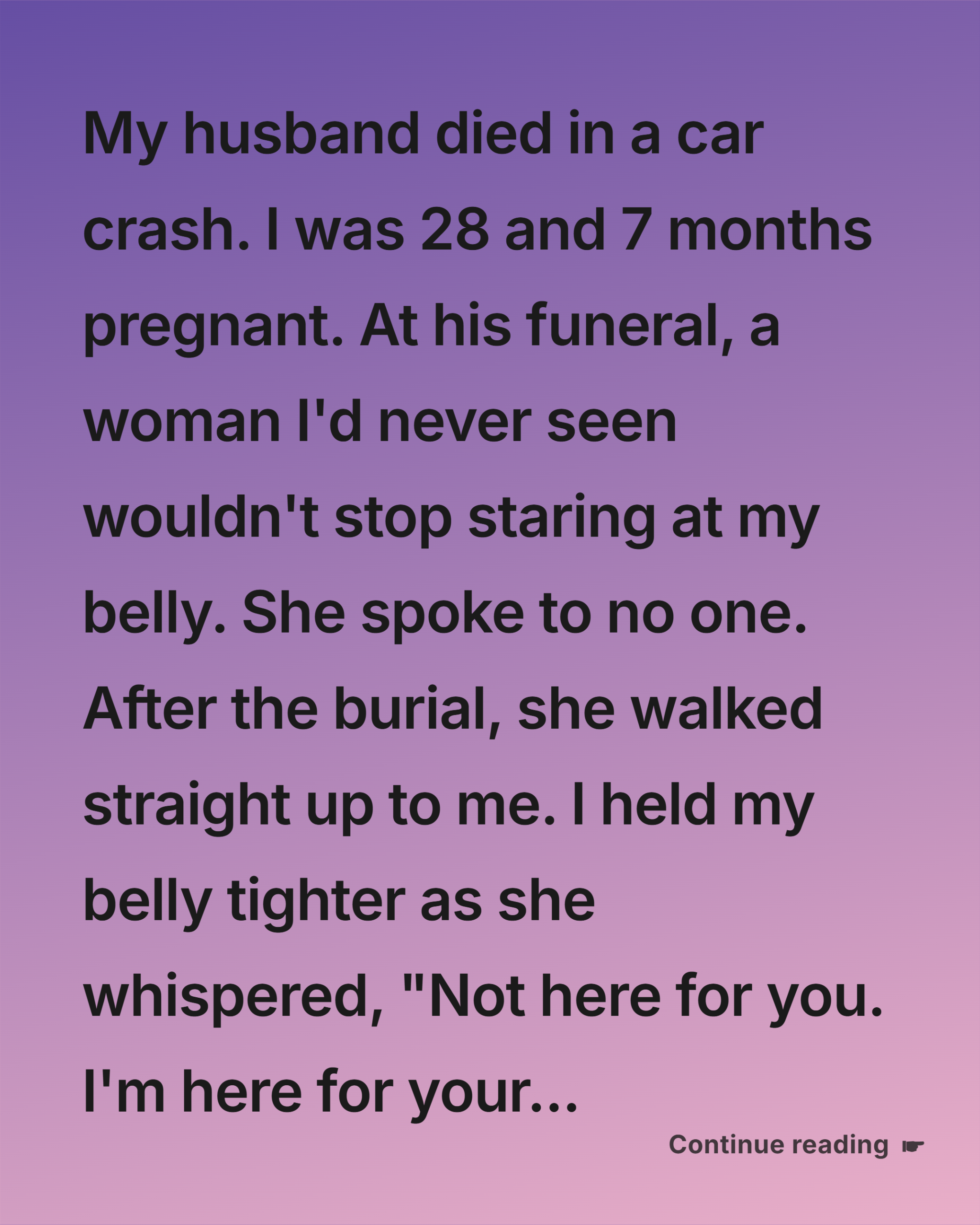
My husband died in a car crash. I was 28 and 7 months pregnant. At his funeral, a woman I’d never seen wouldn’t stop staring at my belly. She spoke to no one. She stood near the back through the entire service, clutching a worn folder against her chest.
After the burial, she walked straight up to me. I instinctively held my belly tighter.
She leaned close and whispered, “Not here for you. I’m here for your husband. I’ve been trying to find him for a year. He saved my daughter’s life 6 years ago. She’s 12 now.”
For a second, I thought she had the wrong funeral.
Her name was Eleanor. Her daughter Lily had been diagnosed with leukemia at five. They’d been on the bone marrow registry for fourteen months before they got a match. The donor was my husband. He’d signed up at a college donor drive when he was 20. He’d been a match before he ever met me.
He never mentioned it.
A year ago, the registry’s mandatory anonymity period ended. He’d opted in. Eleanor and Lily had opted in too. They’d been writing letters through his work address. He’d told them about me and the baby. He’d planned to introduce all of us once Lily was healthy enough to travel.
Three weeks ago, Eleanor’s last letter went unanswered. Then a second one came back unopened. A terrible feeling settled over her. She searched his name online and found the obituary.
She’d driven 6 hours.
With shaking hands, she gave me the folder she’d been carrying. Inside were years of letters from Lily. Crayon drawings at first, then careful handwriting, then pages written by a healthy, growing girl.
The last one was a photograph of a smiling twelve-year-old holding a cake that said, “6 YEARS CANCER FREE.”
Neither of us could speak.
Finally, Eleanor put her hand over mine, the one resting on my belly.
“Lily wanted to come,” she said softly. “I told her to wait until you said it was okay.”
A few minutes later, a car door opened.
Lily stepped out.
Then she ran to me.
When I wrapped my arms around her, I felt something I thought I had lost forever. For the first time since the funeral, I felt my husband’s presence again—not in a photograph, not in a memory, but alive inside the life he had saved.
2.
I was 64 the day I slipped a folded twenty into a stranger’s purse. She was a young mom in the cereal aisle at Aldi, pretending to read the back of a box while she counted coins in her hand. Two kids hanging off the cart.
I knew that face.
I’d worn it for most of 1987.
The exhausted smile. The quiet panic. The mental math that never seemed to work.
I waited until she turned away and dropped the bill into her purse. Then I walked off. Didn’t even buy what I came for.
Years went by.
Life changed.
Last fall my grandson started kindergarten, and there she was at curriculum night.
Older now. More confident. Working as a teacher’s aide.
Halfway through the presentation, she looked up.
Our eyes met.
She froze for just a second.
Then she smiled.
Not a polite smile. A knowing one.
She knew.
I’m sure of it.
We’ve never talked about it. We probably never will.
But what nobody knows—not even my husband, God rest him—is that in 1987, I was the woman counting coins in the cereal aisle.
And someone slipped money into my purse first.
3.
So I’m 22, sleep-deprived, and late for a shift I already hated.
I pull into a gas station and there’s this old guy fumbling with the pump like the buttons are written in another language.
I almost looked away.
I really almost did.
Instead I said, “Need a hand?”
He looked up, and his entire face crumpled.
Not dramatically.
Just enough.
Enough to tell me he’d been holding himself together for too long.
He told me his wife always handled the gas. She’d died six weeks earlier.
He hadn’t pumped his own gas in 47 years.
I didn’t know what to say.
I’m not a guy who knows what to say.
So I just stood beside him and talked him through it.
Click the lever.
Choose your grade.
Wait for the beep.
Simple things.
The things grief turns impossible.
He cried quietly the whole time, one hand braced against the car as if it was the only thing keeping him upright.
I was 18 minutes late to work.
My boss yelled at me.
I couldn’t have cared less.
4.
She was six.
We were at Target for laundry detergent and I was already running on fumes.
There was a little boy crying in another cart.
Not whining.
Not throwing a tantrum.
The broken kind of crying that makes every parent nearby suddenly become interested in the floor tiles.
Without asking me, my daughter climbed halfway out of the cart and handed him her stuffed bunny.
The good one.
The favorite one.
The one I’d paid $24.99 for the week before.
I was annoyed.
I’m not proud of that, but I was.
I almost made her ask for it back.
The boy grabbed it immediately and buried his face in its fur.
His crying stopped.
Just stopped.
Two years later, at a birthday party, his mom recognized us.
She started crying while we stood in line for the bouncy house.
She told me her son had lost his older brother four days before that Target trip.
After the funeral, he’d stopped speaking.
Stopped sleeping.
Stopped acting like himself.
That bunny became the only thing he would hold.
The only thing he would sleep with.
He carried it everywhere for nearly a year.
My daughter doesn’t even remember giving it away.
5.
Grandma is dying and the room smells like the hand soap they keep in those plastic dispensers.
I’m 17.
I don’t know how to be in a room where someone is dying.
There’s a nurse named Marisol who keeps coming back.
Not for vitals.
Not because she has to.
Just to sit.
She brings her Tupperware and eats her rice and beans by the window as if Grandma is having a normal afternoon and simply happens not to be talking.
When my mom and aunts leave to argue about the funeral home, Marisol stays.
When the priest comes, Marisol stays.
When Grandma’s breathing becomes strange and uneven, Marisol stays.
At one point she gently takes Grandma’s hand and whispers something in Spanish.
I don’t understand a word.
But Grandma relaxes.
The room feels less frightening.
Less lonely.
Grandma dies on a Tuesday afternoon.
Marisol hugs me in the hallway and goes back to work because another family needs her.
I’m 26 now.
I’m in nursing school.
I haven’t told anyone why.
6.
He sat down across from me and within two stops I could see it.
The shallow breathing.
The clenched jaw.
The hand pressed flat against his sternum like he was trying to hold himself together.
Panic attack.
I’ve had enough of my own to recognize one immediately.
I didn’t move closer.
I didn’t touch him.
I just shifted seats until I was directly across from him.
Then I said quietly:
“You’re okay. Breathe with me. In for four.”
At first he couldn’t.
Then he tried.
Again.
And again.
The train rattled through the tunnel while we breathed together.
By the time we reached West 4th, the color had returned to his face.
The doors opened.
He stood up.
Looked at me.
Nodded once.
Then disappeared into the crowd.
Six weeks later, my therapist casually mentioned that one of her newer patients had described a panic attack on the subway.
“He said a stranger saved his life.”
She laughed and added, “Could have been anyone.”
I didn’t ask.
Some things don’t need confirmation.
7.
It looked like junk mail.
Handwritten address.
No return label.
I almost threw it away.
Inside was a letter from a woman in Ohio.
Her father had died in March.
While cleaning out his belongings, she found journals he’d kept after losing her mother.
One entry from 2019 described a man at a coffee shop in Pittsburgh who had let him go first in line and then quietly paid for his coffee when his card got declined.
The journal described it as the kindest thing anyone had done for him during the hardest year of his life.
The man was me.
At least, she was certain it was.
He’d written down my description.
Someone at the coffee shop remembered me.
Eventually she tracked me down.
Here’s the strange part.
I don’t remember him.
Not at all.
I read that letter three times.
Then I cried over a kindness I couldn’t even remember giving.
I think most of the kindness we offer fades from our memory.
But for the person receiving it?
It can become unforgettable.
8.
Starbucks drive-thru.
Tuesday morning.
The woman in the SUV ahead of me was sobbing.
Not discreet tears.
Not movie tears.
The kind that shake your shoulders.
The barista handed back her card.
Then handed it back again.
Declined.
I watched her close her eyes for a second.
Just one second.
Like she couldn’t take one more bad thing.
I tapped my phone against the reader.
“I got hers.”
She never even saw me.
When I pulled up, the barista leaned out the window.
“She told me her dog died this morning,” she said. “She just wanted one nice thing today.”
I sat in my truck afterward and cried all the way to work.
I’m a 41-year-old man in a Toyota Tacoma.
And I cried for ten straight minutes.
Now I keep two twenties in my wallet.
They’re not emergency money.
They belong to someone I haven’t met yet.
9.
My mom hasn’t recognized me in two years.
Some days she thinks I’m her sister.
Some days she thinks I’m a stranger stealing her socks.
There’s a janitor named Eddie who works nights.
Every time he passes her room, he stops.
Every single time.
“Evening, Miss Patricia. You look beautiful tonight.”
Sometimes she smiles.
Sometimes she doesn’t react at all.
Last month I stayed late and caught him near the vending machines.
I asked why.
Why keep doing it?
Why bother?
She won’t remember.
He shrugged.
“Maybe.”
Then he pushed his cart a little farther down the hall.
Before leaving, he turned back and said:
“Everyone in here was somebody’s somebody. I just remind ’em.”
I sat in my car for an hour after that.
Couldn’t drive.
10.
I started going to the park because my apartment was too quiet and I was scared of what I might do in it.
There was an old woman on a bench near the dog run.
Every day.
Same coat.
Same spot.
At first I sat two benches away.
Then one bench away.
Then beside her.
We never spoke.
Not once.
A month later she arrived carrying two coffees.
She handed me one.
No explanation.
I drank it.
Still no words.
The silence became a routine.
Then October came.
One gray afternoon I finally broke.
I told her everything.
The thoughts.
The loneliness.
The dangerous nights.
She listened without interrupting.
When I finished, she nodded slowly.
Like I had just commented on the weather.
Then she said:
“I lost my son to that in 2009.”
My chest tightened.
She looked out across the park.
“I learned the look.”
Then she glanced at me.
“I’ve been watching you since the second day you came.”
11.
I was 19 and not doing well.
I checked out a battered copy of *East of Eden* because my therapist suggested reading.
On page 213, tucked deep in the spine, was a folded note.
It read:
“If you’re reading this and you’re struggling, please stay. The world is better with you in it. From a stranger who’s been there.”
I carried that note in my wallet for two years.
When I got better, I wrote one of my own.
Then I slipped it into a copy of *The Bell Jar* at a Little Free Library.
And forgot about it.
Life moved on.
Fifteen years passed.
Last spring my niece came home from a thrift store carrying a paperback.
She’d had a rough year.
A very rough year.
“Look what I found,” she said.
Then she handed me the note inside.
My note.
My handwriting.
My words.
The book had somehow traveled through four states and fifteen years before finding its way into the hands of someone I loved.
I haven’t told her it was mine.
I don’t know if I ever will.
12.
My alternator died on the side of I-44 with my two-year-old screaming in the back seat.
I had $46 in my checking account.
And a job interview I couldn’t afford to miss.
The mechanic who towed me in looked like he’d spent forty years fixing impossible things.
He quoted me $30.
I knew it was worth more.
A lot more.
But I couldn’t afford to argue.
When I asked why it was so cheap, he smiled.
“Pay it forward when you can.”
“That’s the bill.”
Ten years later I’m an ER nurse in Oklahoma City.
Last winter a patient came in after a bad fall.
His name sounded familiar.
Then I saw the address.
Tulsa.
The same neighborhood.
The same family name.
I asked about his daughter.
His face lit up immediately.
As he talked, I realized exactly who he was.
The mechanic.
I never told him I remembered.
I just made sure he received the best care I could give.
The attending physician.
The warm blanket.
The room with the window.
The little things.
13.
I drove the 22 bus for 31 years.
Every winter, on the last route of the night, a man waited at the stop near the hospital.
Sleeping bag.
Worn boots.
No coat that fit.
No matter how cold it got.
I let him ride.
Every night.
To the end of the line and back.
Never charged him.
Nobody noticed.
Nobody cared.
Then one March he stopped showing up.
Then another week passed.
Then another.
I figured the worst.
The way people do.
In June, a man boarded at the same stop.
Clean coat.
Fresh shave.
Clear eyes.
He dropped exact change into the fare box.
Then handed me a hot coffee.
“You probably don’t remember me.”
I did.
Before I could answer, he smiled.
“Thank you for not pretending I wasn’t there.”
That coffee tasted better than any tip I ever got.
14.
My desk was gone.
I had just returned from six months of maternity leave.
The office looked the same, but something felt wrong the second I walked in.
People avoided eye contact.
Conversations stopped when I passed.
Then HR appeared and asked me to follow them.
They escorted me to a small dark room on a floor I’d never seen.
No windows.
No coworkers.
Just a stack of papers waiting on a table.
My stomach dropped.
Before I could ask what was happening, an intern I’d never met slipped into the room and quietly locked the door behind her.
She looked terrified.
Then she handed me a flash drive.
“Don’t sign anything,” she whispered.
“Read what’s on this first.”
A few minutes later she was gone.
Like she had never been there.
The drive contained emails.
Hundreds of them.
Messages proving my position had been targeted long before my leave started.
Messages discussing how to force me out.
The contract on the table included a clause that would have silenced me permanently.
The intern had spent more than a year quietly saving evidence, risking her own career to protect someone she barely knew.
The lawsuit ended last month.
Three executives are gone.
The company paid heavily.
I still don’t know what became of the intern.
But every year on the day I returned from leave, I send a thank-you card to the law firm that helped me win.
Inside is a note asking them to pass along a message if they ever hear from her:
“You changed my life by refusing to look away.”
And maybe that’s what all kindness really is.
Not heroics.
Not headlines.
Just ordinary people refusing to look away when someone else is hurting.
Most of them never know the ending.
But sometimes, years later, the story comes back around and reminds us that the smallest acts often leave the deepest marks.