After my husband passed away suddenly, it was just me and my daughter May against the world. Overnight, the life we knew disappeared, and we had to rebuild everything from the ground up. I learned how to be both a mother and a provider, carrying the weight of grief while making sure May never felt like she had lost her future. I eventually took a job as a bank manager to make ends meet, working long hours and sacrificing more than I ever admitted. Despite the hardships, May flourished—her determination, intelligence, and resilience carried her all the way to an Ivy League university, and I couldn’t have been prouder of the woman she had become.
When she met Carl and they got engaged, I was overjoyed. Seeing my daughter find love after everything we had been through felt like a blessing. I was ready to welcome Carl into our family—until I met his wealthy, judgmental parents. From our very first meeting, they made it clear they believed they were above us. They looked around our modest home with thinly disguised disappointment, criticized our clothes, and made subtle comments about our lifestyle as if our worth could be measured by our bank accounts.
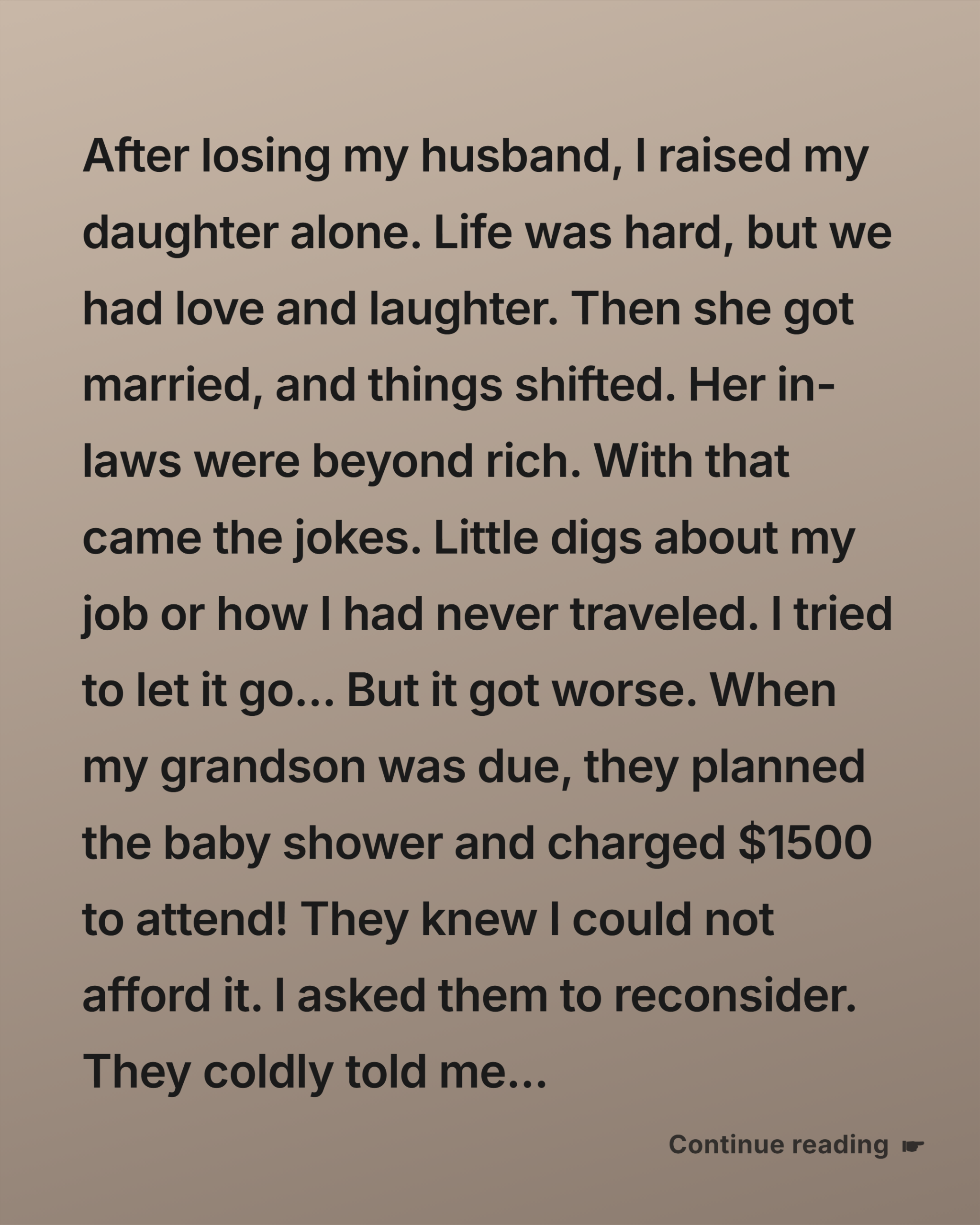
But May and I had survived too much to let anyone make us feel small. We kept our heads high and refused to let their arrogance steal our happiness. When it came time for the baby shower, Carl’s parents announced they would host a grand, luxurious event that would “match the family’s image.” At first, I was grateful they wanted to celebrate May and the baby. But then the invitations arrived—with an unexpected condition. Every guest was required to pay $1,500 just to attend.
I thought there had to be some mistake. A baby shower was supposed to be about love, family, and welcoming a new life—not proving who could afford the most expensive seat at the table. I called them privately and explained that I simply couldn’t justify spending that kind of money. I expected understanding, but instead, they laughed and told me, “Then take out a credit card or sell something.”
Those words stayed with me. Not because I was embarrassed, but because they reminded me exactly how differently we viewed family. To them, everything had a price. To me, the greatest gifts had always been the things money couldn’t buy.
But life has a way of humbling people when they least expect it.
Just days before the extravagant baby shower, everything changed. Carl’s parents’ company suddenly came under investigation, and their accounts were frozen due to allegations of embezzlement. The very wealth they had used to judge others became the source of their downfall. The luxurious venue was canceled, the expensive decorations disappeared, and the event they had spent months planning vanished overnight.
May was devastated. She wasn’t upset about losing the fancy party—she was hurt because she had hoped this would be the moment both families finally came together. She felt caught between the people she loved and the pride that had come between them.
That was when I stepped in.
I told her that a celebration didn’t need chandeliers, expensive menus, or a guest list full of people trying to impress each other. It only needed people who truly cared. So, I opened my home, cooked the food myself, decorated with what we had, and created a baby shower filled with warmth instead of appearances.
I expected a small gathering. Maybe a few close friends and family members.
But when the day arrived, our little home filled with people. Guests who had originally planned to attend the extravagant event showed up with gifts, smiles, and stories. Many of them told May that this was the kind of celebration they had been hoping for all along—the kind where people actually talked, laughed, and felt like family.
Even Carl’s parents arrived.
At first, they stood quietly at the doorway, looking around the same home they had once mocked. But this time, they didn’t see old furniture or modest decorations. They saw people gathered together, celebrating their daughter and grandchild with genuine love.
For the first time, I saw something different in their eyes—not judgment, but realization.
At the end of the evening, after most of the guests had left, Carl’s parents approached me. I prepared myself for another cutting remark, but instead, they stood there silently for a moment before admitting something I never expected to hear.
They asked for my help.
Their company’s investigation had left them overwhelmed. They were facing financial uncertainty, damaged relationships, and consequences they had never imagined. They needed someone who understood finances, someone who could help them organize the chaos and figure out what came next.
I could have reminded them of every cruel comment they had made. I could have turned them away and let them experience the same rejection they had shown us.
But I remembered the woman my husband raised me to be—and the woman I wanted May to see.
So, I used my banking knowledge to guide them through their situation, helping them understand their options and regain control of their finances. It wasn’t easy, and trust wasn’t rebuilt overnight, but slowly, something changed.
From that day forward, Carl’s parents never looked down on us again.
They began visiting more often, not because they felt obligated, but because they genuinely wanted to be part of our lives. They learned that kindness was more valuable than status, and that a loving home could never be measured by its size or price.
Life tested our dignity in ways I never expected. But in the end, the people who tried to measure our worth by money learned the most important lesson: true wealth isn’t found in bank accounts, luxury events, or social status.
It is found in compassion, humility, and the quiet strength of people who keep their hearts open—even when others fail to do the same.