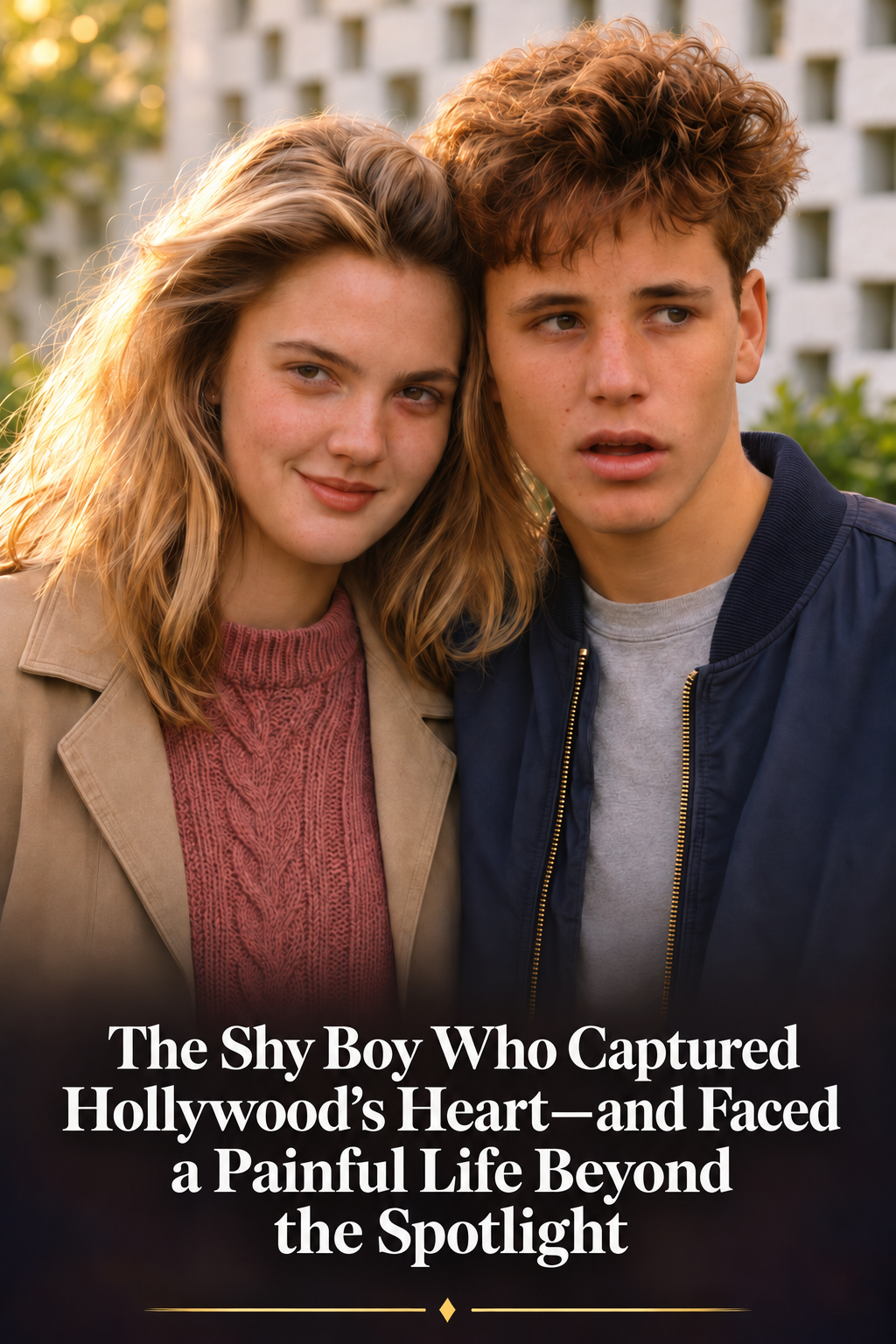
Corey Haim: The Shy Boy Who Captured Hollywood’s Heart—and Faced a Painful Life Beyond the Spotlight
The smile is what people remember.
Before the troubled headlines, before the comeback attempts, before his name became attached to another conversation about the dangers of childhood fame, Corey Haim could light up a screen with an almost effortless charm.
He was funny, vulnerable and easy to root for. Watching him, audiences saw a young actor with a future that seemed wide open.
That promise makes his story so painful. But remembering Haim only for how his life ended overlooks the talent that made people care about him in the first place.
His journey began far from Hollywood, in Toronto, Canada, where he was born on December 23, 1971. As a child, Haim was shy. His mother enrolled him in acting classes to help him develop confidence—a modest beginning for someone who would become one of the most recognizable teenage faces of the 1980s.
By ten, he was appearing in television commercials. A role in the Canadian series The Edison Twins followed, giving the young performer an early foothold in the business.
The camera seemed to suit him. There was an openness to his performances, a quality that made even his most awkward characters feel worth knowing.
His film career began with Firstborn in 1984. More opportunities followed, including Silver Bullet and Murphy’s Romance. Then came Lucas in 1986, a film that gave Haim room to show how much feeling he could bring to a leading role. Playing a bright, vulnerable teenager navigating rejection and first love, he helped establish himself as a rising star.
A year later, The Lost Boys pushed his fame further.
Its stylish mixture of vampires, teenage rebellion and humor found an enduring audience. For Haim, the film also marked the beginning of a celebrated screen partnership with Corey Feldman. Together, they became known as “the two Coreys,” sharing credits in films including License to Drive and Dream a Little Dream.
For fans, they captured something irresistible about the era: youthful confidence, comic chemistry and the feeling that another adventure was always waiting.
Yet Haim’s adult life became increasingly difficult. His struggles with addiction led to rehabilitation treatment, while the career that had brought him such early recognition lost momentum. The transition from teenage favorite to established adult actor proved painfully uneven.
In 2007, he reunited with Feldman for the reality series The Two Coreys. Their familiar pairing returned to television, but the program also exposed strain in their relationship. After two seasons, the series ended; Feldman publicly said he would not continue working with Haim unless his friend sought help.
For viewers who remembered their youthful screen adventures, it was a sobering chapter. The boys audiences had watched together were now adults confronting problems that friendship and nostalgia could not easily resolve.
Then, on March 10, 2010, Haim died at 38 after collapsing at his mother’s apartment.
His history of addiction quickly shaped speculation about his death. The coroner’s findings, however, established a crucial distinction: he died from pneumonia, with significant heart and respiratory problems also identified. His death was ruled natural, and the drugs found in his system were not considered contributing factors.
That finding belongs in every honest account of his life. Addiction was part of Haim’s story, but it should never become an excuse to replace the facts of his death with an assumption.
Nor should his difficulties erase his work.
There is still the sensitive young performer in Lucas. There is still the comic energy of License to Drive. There is still the unmistakable presence he brought to The Lost Boys—a performance that continues to introduce him to audiences who were not alive when it opened.
Corey Haim’s life ended far too early. What survives is more than a cautionary tale about fame: it is a collection of performances that reveal why so many people believed in him, and why, years later, they still remember that smile.