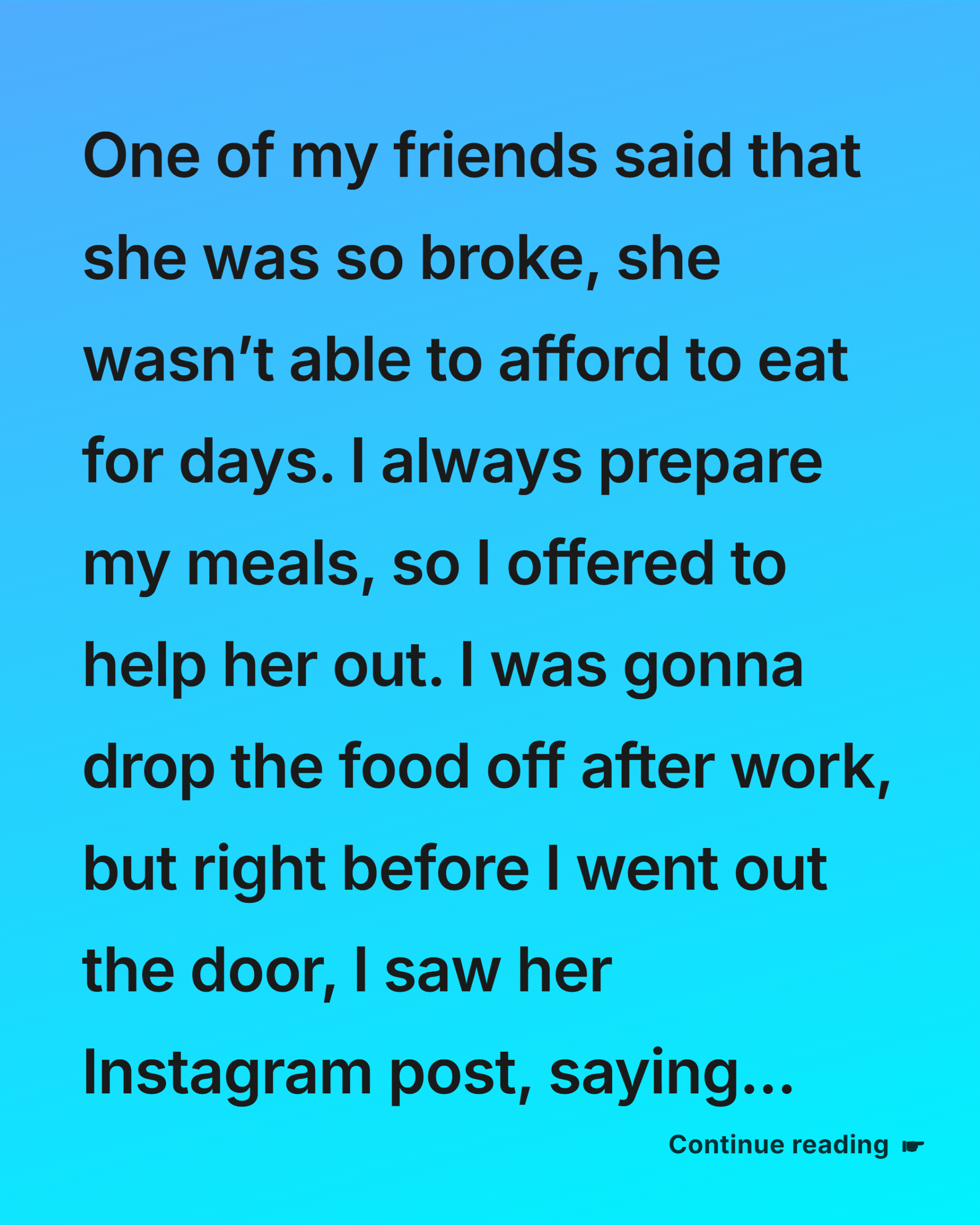
One of my friends told me that she was so broke she hadn’t been able to afford a proper meal for days. The desperation in her words stayed with me, and I immediately felt concerned. I always prepare my own meals, so I offered to bring her some food after work. I packed everything carefully, choosing portions I thought would help her get through the next few days, hoping my small gesture would give her some relief.
But just before I walked out the door, something caught my attention. I opened Instagram and saw her latest post. There she was, sitting at a café with friends, smiling brightly while holding a dessert she had captioned as something she “couldn’t resist.” The picture looked completely different from the situation she had described to me only hours earlier.
For a moment, I stood there with the packed meals in my hands, feeling a mix of confusion and disappointment. I wondered if I had misunderstood her, or if she had been dishonest with me. I had spent time and effort preparing food because I believed she genuinely needed immediate support. Seeing that post made me question everything.
But before reacting, I stopped myself. I reminded myself that people’s struggles are not always visible, and social media rarely tells the complete story. A single photo can hide stress, fear, anxiety, or problems that no one else knows about. Sometimes people hold onto small moments of happiness even when they are going through difficult times.
Instead of accusing her or making assumptions, I decided to reach out calmly. I asked how she was doing and told her I wanted to understand what was really happening. At first, she hesitated, but then she opened up and admitted that she had been feeling overwhelmed, ashamed, and afraid to talk honestly about her financial struggles.
She confessed that she had exaggerated her situation because she didn’t know how to explain how badly she was struggling. She wasn’t literally starving every day, but she was stressed about money, falling behind on expenses, and emotionally exhausted. The café visit, she explained, was a small escape she allowed herself because she wanted to feel normal for a little while. She knew it wasn’t the smartest financial decision, but at that moment, she needed a brief break from everything weighing on her.
Hearing her side changed the way I saw the situation. I still felt that honesty mattered, but I also understood that people sometimes say things from a place of fear rather than with the intention of misleading others. Her confession wasn’t an excuse, but it was a reminder that struggles are often more complicated than they appear from the outside.
By the end of our conversation, we understood each other better than before. I still brought her the meals I had prepared, but this time they were given freely, without resentment or doubt. She thanked me not only for the food but for taking the time to listen instead of immediately judging her.
That experience changed the way I respond when someone shares their struggles with me. It taught me that compassion requires both kindness and understanding—and that before we decide someone’s story doesn’t add up, we should remember that we may only be seeing one small piece of what they are going through.