Kids often see the world in ways adults forget. These 12 moments show how their pure kindness, empathy, and compassion surprised grown-ups, taught powerful lessons, and reminded everyone that caring and understanding can make a real difference—no matter your age.
1.
My MIL came to visit after ten years of silence. I cooked twelve dishes, spending our emergency fund on buying the ingredients, and bought her favorite cake. When MIL sat at the table, she wrinkled her nose and sneered, “Normal people don’t eat this garbage. Your food reeks of poverty.” I swallowed my pride and said nothing. The air felt heavy, like even breathing louder would break something fragile. Then my five-year-old son stepped forward. He gently took her hand and quietly said, “…But my mommy’s love makes it taste like magic. Even dragons would eat it with a smile.” MIL froze. My little boy tilted his head, serious like a tiny wizard, and added, “You don’t have to like it, but you should say thank you. Being mean hurts more than eating yucky food.”
The room went silent except for the ticking clock. I felt my chest swell with pride while my MIL’s expression shifted, as if she had been confronted by something she couldn’t insult away. In just a few words, he reminded her that kindness is stronger than insults, and that real, messy, homemade love can never be diminished. Even my nasty MIL, with all her wrinkles and pride, couldn’t take away that magic. I realized, once again, that kindness and compassion have no age, no status, no prejudice. They just exist — and a child’s love is always the purest.
2.
My niece saw a stray dog shivering in the rain outside our building. She was only seven, and I expected her to run inside, but instead she went to her room and grabbed her little blanket. Thunder rolled outside as the rain grew heavier, but she didn’t hesitate. She wrapped the dog, carried it home, and gave it her sandwich. When I asked why, she said, “He looked cold and hungry like I felt when I didn’t have lunch last week.” There was something unsettling in how clearly she remembered that feeling. She convinced me to help her make a small dog bed in a cardboard box, carefully lining it like it mattered more than anything else. The dog ended up staying with us for a week until the shelter could take it. Her parents later told me she refused dessert that night because she had already given hers away. Kids notice suffering adults and animals in ways we often overlook.
3.
I watched the little boy from across the street notice the elderly man struggling to carry groceries up three flights of stairs. At first, he just stared from the window, almost frozen in thought, as if calculating something far bigger than his age should understand. Then he grabbed his backpack and ran down. He offered to carry a bag himself, and the old man looked shocked, warning him it was heavy. The boy didn’t back away; instead, he insisted the man take the heaviest one while he lifted the lighter bag, gritting his small shoulders against the weight. Later I found out he had skipped his own snack to save money for bus fare to help deliver these groceries. His parents told me he just said, “He looked lonely, so I helped.” Watching that tiny human do something bigger than himself changed how I think about generosity.
4.
My son, nine, saw his classmate sitting quietly during recess, staring at a corner and shaking. Something about the boy’s silence made even the playground noise feel distant. I asked him later why he approached, and he said, “He looked like he lost someone, like my grandma did.” That comparison stayed with me longer than I expected. He took the boy’s hand, guided him to the sandbox, and stayed there quietly, talking only when the boy wanted. He shared his snack without prompting and even let him hold his favorite action figure, as if trust could be transferred that easily. By the end of the day, the boy was smiling, though faintly, like a cracked light slowly turning back on. My son insisted on walking him home to make sure he wasn’t alone. I realized children can offer emotional support as naturally as adults offer advice. He later wrote a short note for the boy to read at night, which he said would keep him “less sad.” Watching him act so thoughtfully humbled me.
5.
A boy in our building noticed the younger kids across the street playing in a puddle without boots, and their mom was too busy carrying groceries to stop them. The rain was getting colder, and the children’s laughter was mixing with shivering discomfort no one was addressing. He ran home, grabbed his rain boots and an old jacket, and gave them to the kids. He didn’t ask for anything in return, not even a thank-you, just stood there quietly as if it was obvious what needed to be done. Later, I overheard him explain to his friends that everyone should have dry feet when it rains. His own parents were proud but confused because he had used his only pair. I realized small sacrifices don’t need to be dramatic to make a real difference.
6.
I saw a girl in my building giving her favorite toy to the little boy whose parents couldn’t afford anything new for his birthday. The boy hesitated like he didn’t believe it was real. She refused to take it back even when he tried to return it, shaking his head in disbelief. The next day she packed her lunch carefully to share half with him because he said he was hungry. Her parents said they never asked her to do it; she just “knew it was right.” She even cleaned his room while he was at school so he would come home to something tidy, as if she understood dignity better than adults did. I had to sit down because watching a kid make these sacrifices just to make another kid’s day was surreal.
7.
My daughter was only seven when my sister had a stillbirth, and I couldn’t stop crying for days. The hospital room felt like it had lost its warmth, as if even time was moving carefully. She didn’t fully understand death, but she came into the room with a small drawing of a rainbow and whispered that the baby would always have a friend. She held my sister’s hand while she sobbed and insisted we plant a little flower in the garden “so the baby has something pretty to see,” like grief needed something living to hold onto. I watched her comfort her aunt with a sincerity I’d never seen in an adult.
Over the next week, she made tiny bracelets and handed them to anyone who looked sad in the hospital. She said, “Maybe it will make them smile like auntie and you smiled for me.” I realized she had already learned grief doesn’t have to be faced alone. Even at seven, she found ways to transform sorrow into care.
8.
I watched a group of kids gather to help a stray cat trapped in a fence behind our building. Its cries were faint but persistent, making the whole moment feel urgent in a way only children seemed to notice first. Each one brought something: water, snacks, and gloves. They spent an hour carefully freeing it without any adult interference, whispering instructions like a coordinated rescue team. Later, they pooled allowance money to buy a proper shelter for it. One kid even said he would sleep near it that night because he didn’t want it to be alone. The next morning, all three kids had muddy shoes and soaked clothes, but they were laughing as if exhaustion didn’t matter. I realized teamwork and empathy don’t need age to exist.
9.
My nephew studies at the same school I work in. Once, he noticed a new boy in school sitting alone at lunch, staring at his tray without touching it. Without asking, he shared half of his sandwich and all his fruit snacks. The boy looked startled, like kindness was unfamiliar. Later that week, he saved up coins to buy a small notebook for the boy because he remembered he didn’t have any. The boy cried when he received it, holding it like something fragile and priceless, and my nephew shrugged like it was no big deal. He didn’t tell anyone, didn’t want credit. Watching him quietly build someone else’s confidence made me reconsider how adults measure kindness.
10.
My son noticed the elderly lady across the street struggling to carry groceries up three flights of stairs. The bags looked heavier than she did. At first, I thought he was going to just watch, but he ran down, offered to take a bag, and insisted I let him help. I hesitated because it was heavy, but he refused to back down, determined in a way that felt unsettlingly grown-up. When he handed the bag to her, she teared up and thanked him. He even gave her his lunch from school even though he was hungry. I had to remind him to eat. That night, he told me he wanted to help her every week, as if he had quietly made a promise to the world. I realized small kids notice hardship before most adults do, and they act without thinking of credit.
11.
I was watching my son play in the park when he noticed a younger boy fall off the swings and scrape his knee. The cry was immediate, sharp enough to silence the other kids for a second. He ran over immediately, got his own water bottle, and helped clean the scrape with a tissue from his backpack. The other kids nearby were laughing and pointing, but he ignored them completely, focused only on the boy’s trembling hands. Then he gave him his own band-aid and sat with him until his mom came. I asked later why he didn’t just leave, and he said, “He was scared and lonely.” That night, he insisted on packing an extra first-aid kit in his bag for anyone who might get hurt. I realized he already understood empathy better than most adults in our building. The mother later thanked him repeatedly, but he just shrugged. He told me he would help again tomorrow if needed.
12.
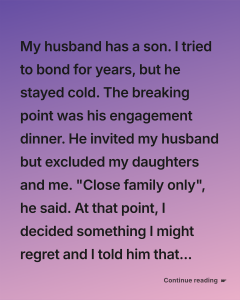
My ex left me after 15 years of marriage, and I was alone with my six-year-old son, Jason. His dad never came to see him. The silence of that absence lingered in our home like something unfinished. One day, Jason didn’t come home after school. Panicking, I called the police. Five hours later, a knock — it was my ex’s new wife, furious, holding Jason’s hand. My blood ran cold when I learned what had happened. Jason, remembering it was my birthday, had bravely gone to his dad’s new house. He asked him to at least send flowers, a tiny sign that I still mattered, standing there like hope he refused to abandon. Somehow, Jason still trusted his dad, despite everything. My ex softened, promised to send flowers, and even agreed to spend time with his son.
But his new wife, unhappy in her own life, stormed in, accusing me of manipulating him. I invited her for tea. To my surprise, she opened up: she had suffered two stillbirths and couldn’t have children. Jason reminded her of what she had lost, and she was miserable in her marriage. Sitting there, the anger slowly dissolved into something heavier and more human. Jason’s courage and kindness had broken the ice. Slowly, he began seeing his dad, and I learned that empathy and listening can turn even the most painful circumstances into understanding, forgiveness, and a little unexpected peace.